
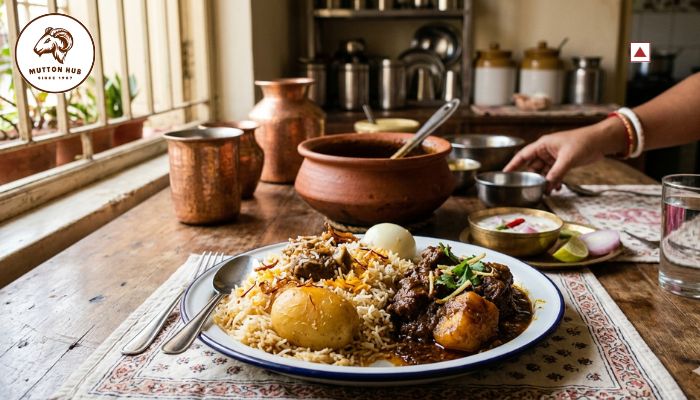
Kolkata’s love for mutton is deeply connected to the city’s history, traditions, and food culture. In Kolkata, mutton is not simply another ingredient used in daily cooking. It represents celebration, comfort, family gatherings, and generations of culinary tradition that continue even today.
From rich kosha mangsho served during Sunday lunches to fragrant biryani enjoyed during festivals and special occasions, mutton has become one of the defining parts of Kolkata’s food identity.
What makes this connection unique is how strongly food and emotion come together in Bengali culture. For many families, mutton dishes are tied to memories of home cooking, festive afternoons, and recipes passed down across generations.
The Historical Influence Behind Kolkata’s Mutton Culture
The roots of Kolkata’s mutton culture go back centuries. Bengali cuisine evolved through influences from traditional local cooking, Mughlai cuisine, and the Nawabi kitchens of Awadh.
When Nawab Wajid Ali Shah arrived in Kolkata during the 19th century, he brought refined Mughlai cooking traditions with him. These influences gradually blended with Bengali tastes and ingredients, creating dishes that became iconic in the city.
This fusion helped popularize:
- • Rich mutton gravies
- • Dum-style cooking
- • Aromatic spice blends
- • Slow-cooked meat preparations
Over time, Kolkata developed its own distinct style that balanced richness with subtle flavor.
Why Mutton Became a Sunday Tradition
In many Kolkata households, Sunday and mutton still go hand in hand. For decades, families followed a familiar routine:
- • Visit the local meat market early in the morning
- • Buy fresh mutton for lunch
- • Prepare slow-cooked curry at home
- • Eat together as a family
Even today, this tradition remains strong across many Bengali homes. The cooking itself becomes part of the family ritual, especially with dishes like kosha mangsho that require patience and gradual cooking.
The Emotional Connection Bengali Families Have with Mutton
One reason Kolkata’s love for mutton continues so strongly is the emotional value attached to these dishes.
For many people, mutton reminds them of the following:
- • Childhood family lunches
- • Durga Puja celebrations
- • Eid gatherings
- • Weddings and special occasions
- • Traditional recipes cooked by parents and grandparents
This emotional attachment keeps traditional recipes alive even as modern lifestyles continue changing.
Kolkata’s Unique Style of Mutton Cooking
Kolkata’s cooking style focuses heavily on depth of flavor instead of extreme spice.
Traditional Bengali mutton dishes usually include ingredients like onion, yogurt, mustard oil, ginger-garlic paste, potatoes, and whole spices such as cinnamon, cloves, and cardamom.
The cooking process often involves slow simmering, which allows the meat to absorb flavor gradually while becoming tender and juicy.
This approach is one reason dishes like kosha mangsho have such a rich texture and aroma. If you’re interested in recreating similar results at home, understanding how to cook mutton soft and juicy can make a huge difference.
The Importance of Potatoes in Kolkata Mutton Dishes
One of the most recognizable features of Kolkata-style mutton curry is the potato.
For outsiders, adding potatoes to meat curry may seem unusual. In Bengali cooking, however, potatoes are considered an essential part of the experience.
A well-cooked potato absorbs the rich flavor of the gravy and becomes incredibly soft during slow cooking. Many people in Kolkata enjoy the potato in mutton curry just as much as the meat itself.
This small detail reflects how Kolkata’s food culture values balance, comfort, and texture in every dish.
Mutton Biryani Strengthened Kolkata’s Obsession with Mutton
Kolkata biryani also played a major role in expanding the city’s love for mutton.
Unlike heavily spiced biryanis from some other regions, Kolkata-style biryani focuses on aroma, balance, and tenderness. The combination of fragrant rice, soft mutton, and the famous biryani potato has become one of the city’s most iconic foods.
Today, biryani remains one of the biggest reasons why mutton continues holding such a strong place in Kolkata’s food culture.
Modern Kolkata Still Prefers Mutton
Even with the rise of fast food and changing eating habits, mutton remains extremely popular across Kolkata.
Restaurants, home kitchens, and online delivery platforms continue seeing strong demand for:
- • Mutton curry
- • Kosha mangsho
- • Biryani
- • Rezala
- • Chaap
- • Kathi rolls
What has changed is convenience. Many households now prefer online ordering and same-day delivery instead of visiting crowded local markets.
Reliable freshness and hygienic preparation have become increasingly important for modern home cooking. If you’re looking for fresh cuts suitable for Bengali recipes and slow cooking, you can explore the range available at Mutton Hub for traditional home-style preparations.
Final Thoughts
Understanding Kolkata’s love for mutton means understanding much more than recipes.
It reflects the city’s history, family traditions, emotional connections, and cooking philosophy. From Sunday kosha mangsho to festive biryani gatherings, mutton continues to play an important role in Kolkata’s culinary culture.
Even as lifestyles evolve and food delivery becomes more modern, the city’s affection for slow-cooked, flavorful mutton dishes remains as strong as ever.
Latest Posts

August 24, 2026
Is Goat Meat Healthier Than Other Red Meats?
July 17, 2026
Mutton for Muscle Building: Is It Good for You?