When it comes to goat meat health benefits, goat meat is often considered a nutritious alternative to other red meats. It provides high-quality protein along with important nutrients such as iron, zinc, and vitamin B12. Compared with some commonly eaten red meats, goat meat can also be relatively lean, making it an appealing option for people who want to enjoy red meat while keeping their overall fat intake in check.
In India, goat meat is commonly referred to as mutton, and it is widely enjoyed in dishes ranging from Bengali kosha mangsho and korma to biryani and traditional curries. But how does goat meat actually compare with other red meats? Let’s break it down.
What Makes Goat Meat Nutritionally Different?
Goat meat is a nutrient-dense source of animal protein. It contains all the essential amino acids your body needs to build and maintain muscle tissue, while also providing several micronutrients that are important for everyday health.
One of its biggest advantages is its relatively lean nature. The nutritional profile can vary depending on the cut, age of the animal, and cooking method, but choosing lean cuts and trimming visible fat can help keep the meal lighter.
Goat meat also provides iron, zinc, selenium, and vitamin B12. These nutrients support functions such as oxygen transport, immune health, and normal energy metabolism.
Goat Meat vs Other Red Meats
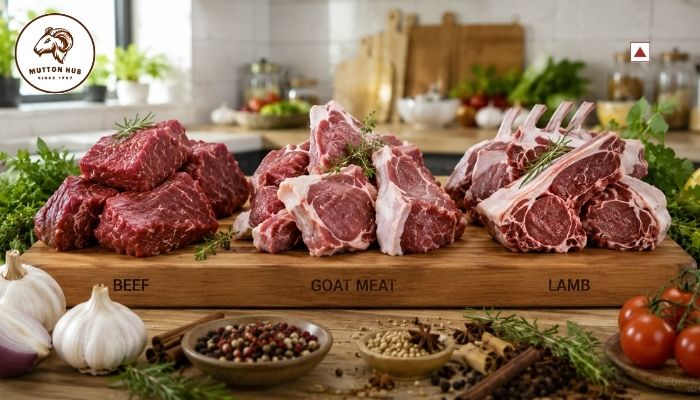
Not all red meat has the same nutritional profile. Beef, lamb, pork, and goat meat can differ considerably in their protein, fat, calorie, and micronutrient content.
Goat meat is generally known for being leaner than many cuts of lamb and beef. Chicken and fish can still be leaner depending on the specific cut, but among red meats, goat meat can be a useful option for people looking for a protein-rich meal without choosing particularly fatty cuts.
| Nutritional Factor | Goat Meat | Beef | Lamb |
| Protein | High | High | High |
| Fat | Generally lower | Varies by cut | Often higher |
| Iron | Good source | Good source | Good source |
| Vitamin B12 | Good source | Good source | Good source |
| Zinc | Good source | Good source | Good source |
The important point is that the specific cut and cooking method matter. A lean goat meat preparation can be very different nutritionally from a rich curry prepared with large amounts of oil, cream, or butter.
High-Quality Protein in Goat Meat
Protein is one of the main reasons meat is included in a balanced diet.
Goat meat provides complete protein, meaning it contains all nine essential amino acids that the body cannot produce on its own. These amino acids are involved in muscle maintenance, tissue repair, and several other biological functions.
This makes goat meat particularly useful for people who want to include more protein in their meals. If you’re interested specifically in its protein content, our guide on Protein in Mutton: Nutrition, Benefits & Daily Intake goes into greater detail about how mutton contributes to daily protein intake.
Goat Meat and Iron
Iron is another important nutrient found in goat meat.
Your body uses iron to produce hemoglobin, a protein in red blood cells responsible for carrying oxygen around the body. Meat provides haem iron, which is generally more readily absorbed than the non-haem iron found in many plant foods.
Including iron-rich foods in a varied diet can therefore be useful, particularly when combined with vegetables and other nutrient-dense foods.
Goat Meat for Muscle Health
Because goat meat provides complete protein along with nutrients such as iron and zinc, it can fit well into a diet focused on maintaining muscle and supporting an active lifestyle.
However, eating goat meat alone won’t build muscle. Resistance training, sufficient overall protein, adequate calories, sleep, and a balanced diet all play important roles.
Is Goat Meat Better for Weight Management?
Goat meat can be a good option for people who are trying to manage their calorie and fat intake, particularly when lean cuts are chosen.
The preparation makes a big difference, though. A simple grilled or lightly cooked goat meat dish will have a very different calorie profile from a rich curry made with generous amounts of oil.
Rather than avoiding red meat altogether, focus on portion size, the cut you choose, and how you prepare it. Pairing mutton with vegetables, salads, or other fibre-rich foods can also make the overall meal more balanced.
Goat Meat Health Benefits Depend on How You Cook It
Even a naturally lean meat can become a heavy meal depending on the recipe.
Slow cooking, pressure cooking, grilling, roasting, and lightly spiced curries can all be used to prepare goat meat. The goal is not to remove flavour, but to avoid relying on excessive oil or very rich ingredients.
Fresh meat also makes a difference to the final dish. Good-quality mutton has better texture and flavour, allowing you to create satisfying meals without needing to cover the meat with excessive sauces or fats.
Is Goat Meat Healthier Than Beef or Lamb?
There isn’t one red meat that is automatically the healthiest for everyone.
Goat meat can have an advantage because many cuts are relatively lean while still providing plenty of protein and important micronutrients. However, the nutritional differences depend on the specific cut, portion size, and preparation method.
For someone trying to reduce saturated fat, a lean goat meat cut may be preferable to a fatty beef or lamb cut. At the same time, a heavily oiled goat meat curry may contain more calories than a prepared lean cut of another meat.
So instead of asking which red meat is universally healthier, it’s more useful to compare lean cuts, portions, and cooking methods.
How to Include Goat Meat in a Balanced Diet
Goat meat doesn’t need to be complicated to fit into a healthy eating pattern.
Choose fresh cuts, remove excess visible fat where appropriate, and keep portions sensible. Combining mutton with vegetables, salads, rice, roti, or other nutritious foods can create a satisfying and balanced meal.
You can also vary the cuts depending on the dish. Curry cut works well for traditional curries, while raan is suitable for larger roasts and slow-cooked preparations. Chops are useful for grilling or pan cooking, and keema can be used in a variety of everyday dishes.
Choosing Fresh Goat Meat Matters
The nutritional value of goat meat is only one part of the equation. Freshness, hygienic handling, and proper storage are equally important when buying raw meat.
For home cooking, choosing fresh mutton from a reliable source can give you better texture, flavour, and consistency across different dishes. At Mutton Hub, you can choose from cuts such as curry cut, korma cut, rezala cut, kosha mangsho cut, raan, chops, biryani cut, kaleji, and keema.
This makes it easier to select the right cut for the meal you’re planning instead of buying one type of meat for every recipe.
Final Thoughts
The goat meat’s health benefits make it a nutritious choice within a balanced diet. It provides complete protein, iron, zinc, vitamin B12, and other essential nutrients, while many cuts are relatively lean compared with some cuts of other red meats.
That doesn’t mean goat meat is automatically healthier than every other red meat. Your choice of cut, portion size, preparation method, and overall diet matter just as much.
When you choose fresh mutton and prepare it thoughtfully, goat meat can be a flavorful and nutritious part of a varied diet.
FAQs 🗨️
Goat meat can be a nutritious choice because many cuts are relatively lean while providing high-quality protein, iron, zinc, and vitamin B12. However, the overall nutritional value depends on the cut, portion size, and cooking method.
Many cuts of goat meat are relatively lean compared with some cuts of beef and lamb. Choosing lean cuts and trimming visible fat can help reduce overall fat intake.
Yes. Goat meat provides complete protein containing all nine essential amino acids, which can support muscle maintenance and recovery when combined with adequate exercise and a balanced diet. For more information, you can also read our guide on mutton for muscle building.
Yes. Goat meat provides haem iron, which is readily absorbed by the body and helps support healthy red blood cells and oxygen transport.
Not necessarily. Chicken can be leaner and lower in calories, while goat meat provides a range of nutrients such as iron, zinc, and vitamin B12. The healthier choice depends on the cut and preparation method.
Latest Posts

August 24, 2026
Is Goat Meat Healthier Than Other Red Meats?
July 17, 2026
Mutton for Muscle Building: Is It Good for You?