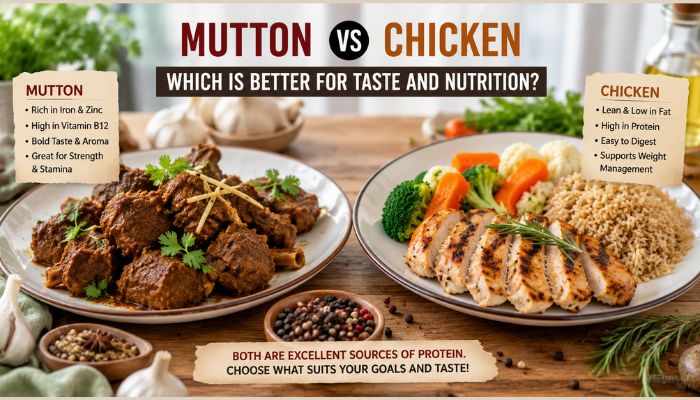
When it comes to choosing between mutton vs chicken, many people wonder which one is healthier, tastier, and better suited to their dietary needs. Both are excellent sources of protein and essential nutrients, but they differ in flavour, fat content, and nutritional profile. The right choice ultimately depends on your health goals, cooking preferences, and personal taste.
Whether you’re preparing a hearty family meal or following a balanced diet, understanding the differences between mutton and chicken can help you make an informed decision.
Nutritional Comparison: Mutton vs Chicken
Both mutton and chicken are rich in protein, but their nutritional values vary.
Chicken, especially skinless breast meat, is naturally lower in fat and calories, making it a popular choice for people aiming to lose weight or maintain a lean diet. Mutton, on the other hand, contains slightly more fat but is packed with important nutrients such as iron, zinc, vitamin B12, and complete protein that support muscle health and energy production.
When eaten in moderation, both meats can be part of a healthy, balanced diet.
Protein Content: Which One Has More?
Protein is one of the biggest reasons people include meat in their diet. While both mutton and chicken are excellent sources of complete protein, there are some nutritional differences worth noting.
| Nutrient (Per 100g Cooked Meat) | Chicken Breast | Lean Mutton |
| Protein | ~31 g | ~25–27 g |
| Fat | Lower | Slightly Higher |
| Iron | Moderate | Higher |
| Vitamin B12 | Moderate | Higher |
| Zinc | Moderate | Higher |
Although chicken contains slightly more protein per 100 grams, mutton provides an excellent amount of high-quality complete protein along with higher levels of iron, zinc, and vitamin B12, making it a nutritious choice for a balanced diet.
If you’d like to understand the nutritional value of mutton in more detail, explore our guide on Protein in Mutton: Nutrition, Benefits & Daily Intake.
Which One Tastes Better?
Taste is where the biggest difference lies.
Mutton has a rich, bold, and distinctive flavour that becomes even more delicious when slow-cooked with spices. It is the preferred choice for traditional dishes such as kosha mangsho, rezala, korma, biryani, and slow-cooked curries.
Chicken has a milder flavour that easily absorbs marinades and seasonings, making it suitable for a wide variety of cuisines. Its versatility makes it a common choice for quick weekday meals.
If you’re someone who enjoys rich, aromatic curries and festive meals, mutton often delivers a more satisfying dining experience.
Which Is Better for Muscle Building?
Both meats support muscle growth because they provide complete protein.
Chicken is often chosen by athletes because it’s leaner and slightly higher in protein, while mutton provides additional iron, zinc, and vitamin B12 that support recovery and overall health.
For readers interested in fitness nutrition, you can also read our article on Mutton for Muscle Building to learn how fresh mutton supports muscle recovery and strength.
Which Meat Is Better for Weight Management?
If your primary goal is reducing calories and fat intake, chicken usually has an advantage.
However, this doesn’t mean mutton should be avoided. Lean cuts of fresh mutton enjoyed in moderate portions can easily fit into a balanced diet. Cooking methods also matter. Grilled, roasted, pressure-cooked, or lightly curried preparations are healthier than deep-fried options.
Portion control is often more important than choosing one meat over the other.
Health Benefits of Mutton and Chicken
Both meats offer unique nutritional benefits.
Mutton provides:
- ✓ High-quality complete protein
- ✓ Iron for healthy red blood cells
- ✓ Zinc for immune support
- ✓ Vitamin B12 for energy production
- ✓ Rich flavour and satisfying texture
Chicken provides:
- ✓ Lean protein
- ✓ Lower fat content
- ✓ Fewer calories
- ✓ Easy digestibility
- ✓ Versatility in cooking
Including either meat or other protein sources as part of a balanced diet can help meet your daily nutritional needs.
Which One Should You Choose?
There isn’t a single winner in the mutton vs chicken debate.
If you’re looking for a lean, everyday protein source, chicken is an excellent option. If you prefer a richer flavour, traditional recipes, and additional nutrients such as iron and vitamin B12, fresh mutton is a fantastic choice.
The best approach is to enjoy both in moderation while maintaining a balanced diet that includes vegetables, whole grains, and regular physical activity.
Choose Fresh Meat for Better Nutrition
Regardless of which meat you choose, freshness plays a crucial role in both taste and nutritional quality.
Fresh, hygienically prepared meat cooks better, tastes better, and delivers the best overall experience. If you’re looking for premium-quality fresh mutton for your favourite homemade recipes, Mutton Hub offers a wide selection of hygienically prepared cuts, including curry cut, biryani cut, chops, keema, raan, and more.
You can also visit our Contact Us page if you’d like to know more about our products or place an order.
Final Thoughts
The comparison between mutton vs chicken isn’t about deciding which meat is universally better. Both offer excellent nutritional benefits and can be part of a healthy lifestyle. Chicken is leaner and slightly higher in protein, while mutton stands out for its rich flavour, iron, zinc, vitamin B12, and satisfying taste.
Choosing fresh, quality meat and preparing it using healthy cooking methods will help you enjoy the best of both worlds while meeting your nutritional and culinary preferences.
FAQs 🗨️
Both can be healthy choices. Chicken is generally lower in fat and calories, while mutton provides more iron, zinc, and vitamin B12. The healthier option depends on your dietary goals and portion sizes.
Chicken breast contains slightly more protein per 100 grams than lean mutton. However, mutton is still an excellent source of complete protein and essential nutrients
Both support muscle growth because they are rich in high-quality protein. Chicken is leaner, while mutton offers additional minerals like iron and zinc that aid recovery and overall health.
Latest Posts

August 24, 2026
Is Goat Meat Healthier Than Other Red Meats?
July 17, 2026
Mutton for Muscle Building: Is It Good for You?