
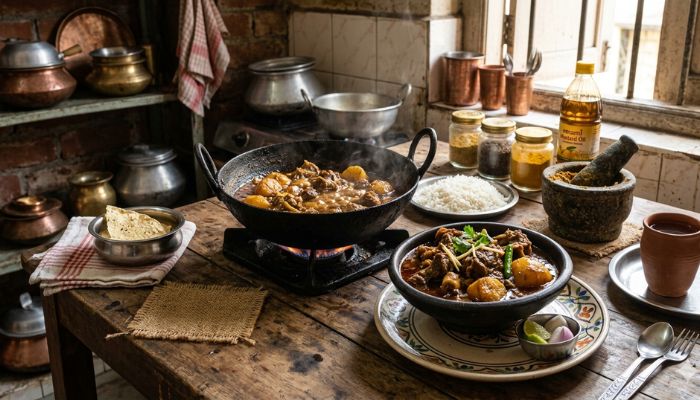
Kolkata mutton culture goes far beyond food. It’s part of family gatherings, Sunday lunches, festive celebrations, old restaurants, and home kitchens that carry recipes across generations.
From slow-cooked kosha mangsho to rich rezala and comforting light curries served with rice, the city has built a food culture where mutton holds a special place. What makes Kolkata unique is not just the recipes themselves but the way people cook, serve, and enjoy mutton as part of everyday life.
Understanding Kolkata’s mutton culture means understanding tradition, cooking techniques, spice balance, and the emotional connection people have with these dishes.
Why Mutton Holds a Special Place in Kolkata
In many Kolkata households, mutton is associated with weekends and celebrations. A typical Sunday meal often includes freshly cooked mutton curry paired with steamed rice or luchi. Even today, many families continue the tradition of visiting local meat shops early in the morning to buy fresh cuts for lunch preparation.
Unlike fast food trends that come and go, mutton remains deeply rooted in Bengali food culture because of its richness, versatility, and comforting flavor.
The city’s culinary history also plays a major role. Influences from Mughlai cuisine, Nawabi cooking styles, and traditional Bengali spices helped shape the distinct mutton preparations Kolkata is known for today.
The Signature Kolkata Style of Cooking Mutton
Kolkata-style mutton dishes are usually rich in flavor but balanced in spice. Instead of overwhelming heat, the focus is often on slow cooking, aroma, texture, and depth.
One major characteristic is patience. Bengali-style mutton cooking traditionally relies on gradual cooking methods that allow the meat to soften naturally while absorbing spices completely.
Ingredients commonly used include:
- • Onion
- • Ginger-garlic paste
- • Yogurt
- • Potato
- • Mustard oil
- • Whole spices like cinnamon, cardamom, and cloves
The result is flavorful gravy with soft, juicy meat that pairs perfectly with rice, pulao, or paratha.
Many home cooks still follow traditional slow-cooking methods to achieve authentic texture and taste. If you’re trying to improve tenderness at home, you can also explore our guide on how to cook mutton soft and juicy at home for practical cooking tips.
Kosha Mangsho: The Heart of Kolkata Mutton Culture
No discussion about Kolkata mutton culture is complete without kosha mangsho.
This iconic Bengali dish is known for:
- • Thick dark gravy
- • Slow-cooked texture
- • Rich spice coating
- • Deep caramelized flavor
Unlike lighter curries, kosha mangsho is cooked slowly until the oil separates and the gravy clings tightly to the meat. The dish is especially popular during festivals, family gatherings, and special weekend meals. Many people in Kolkata consider homemade kosha mangsho a comfort food deeply connected to childhood memories and family traditions.
Why Potatoes Are Important in Bengali Mutton Curry
For outsiders, adding potatoes to mutton curry may seem unusual. In Kolkata, however, it is almost expected.
Potatoes absorb the flavor of the gravy beautifully and become one of the most loved parts of the dish. In many Bengali homes, a perfectly cooked potato in mutton curry is treated with the same importance as the meat itself.
This small detail reflects how Kolkata’s cooking style focuses not only on protein, but on the complete eating experience.
The Influence of Mughlai and Nawabi Cuisine
Kolkata’s mutton culture was heavily influenced by Mughlai cooking traditions brought by the Nawabs of Awadh.
This influence introduced the following:
- • Rich gravies
- • Slow dum cooking
- • Aromatic whole spices
- • Delicate balance of flavor
Popular dishes like rezala and chaap still carry strong Mughlai influence while adapting to Kolkata’s local taste preferences. Over time, the city developed its own unique identity by blending Bengali comfort food with royal cooking techniques.
Street Food and Restaurant Influence in Kolkata
Mutton is not limited to home cooking in Kolkata. The restaurant and street food culture around mutton is equally strong.
Across the city, people enjoy:
- • Mutton biryani
- • Mutton chaap
- • Kosha mangsho with paratha
- • Kathi rolls
- • Mughlai dishes
Many iconic restaurants built their reputations on signature mutton recipes that continue to attract locals and tourists alike.
Even today, Kolkata’s food scene maintains a balance between traditional home-style cooking and rich restaurant-style preparations.
Fresh Meat Matters in Kolkata Cooking
One reason traditional Kolkata mutton dishes taste so rich is the importance placed on fresh meat.
The texture, cooking time, and flavor of dishes like kosha mangsho depend heavily on the following:
- • Proper cuts
- • Freshness
- • Bone-to-meat ratio
- • Hygienic preparation
This is why many home cooks prefer sourcing meat from trusted local providers who understand Bengali cooking preferences. If you’re looking for fresh cuts suitable for traditional curries and slow cooking, you can explore the collection available at Mutton Hub for home-style Bengali preparations.
Slow Cooking Still Defines Authentic Flavor
Modern kitchens often rely on pressure cookers for convenience, but traditional Kolkata mutton cooking still values slow cooking techniques.
Slow cooking helps:
- • Tenderize the meat naturally
- • Deepen the spice flavor
- • Create richer gravy texture
- • Improve aroma and consistency
This method remains one of the defining characteristics of authentic Bengali mutton dishes.
Mutton as an Emotional Part of Bengali Food Culture
In Kolkata, mutton is more than a recipe. It represents celebration, comfort, hospitality, and nostalgia.
Many people associate mutton dishes with the following:
- • Sunday family lunches
- • Durga Puja gatherings
- • Eid celebrations
- • Weddings and special occasions
- • Childhood memories of home-cooked meals
This emotional connection is one of the reasons Kolkata’s mutton culture remains so strong even today.
Final Thoughts
Understanding Kolkata mutton culture means appreciating the traditions, techniques, and emotions connected to the food.
From slow-cooked kosha mangsho to Mughlai-inspired rezala, Kolkata’s cooking style focuses on flavor, patience, and comfort. The city’s love for mutton continues through family recipes, restaurant traditions, and modern home kitchens that still value authentic preparation methods.
Whether you’re cooking at home or exploring Bengali cuisine for the first time, Kolkata’s approach to mutton offers a rich culinary experience built on heritage and taste.
Latest Posts

August 24, 2026
Is Goat Meat Healthier Than Other Red Meats?
July 17, 2026
Mutton for Muscle Building: Is It Good for You?