
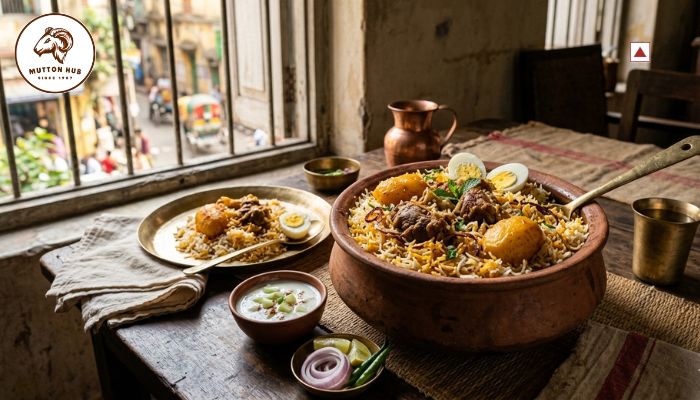
Kolkata-style aloo biryani is more than just a rice dish in Bengal. It’s an emotion connected to family celebrations, Sunday lunches, late-night food cravings, and Kolkata’s deep-rooted love for slow-cooked Mughlai flavours. Known for its fragrant rice, tender mutton, delicate spices, and the iconic potato, this biryani stands apart because of its subtle aroma and balanced richness rather than overpowering heat.
What truly makes Kolkata biryani special is the famous “aloo.” For many Bengalis, the potato is just as important as the meat itself. In fact, Kolkata’s unique biryani tradition traces back to Nawab Wajid Ali Shah’s Awadhi influence in the city during the 19th century, which shaped the biryani culture Kolkata is famous for today.
If you love aromatic biryani with soft potatoes and juicy mutton, this homemade version brings authentic Kolkata flavor straight into your kitchen.
What Makes Kolkata Biryani Different?
Unlike heavily spiced biryanis from other regions, Kolkata biryani is lighter, more aromatic, and carefully balanced.
Its signature elements include:
- • Long-grain fragrant rice
- • Tender mutton pieces
- • Large soft potatoes
- • Mild spices
- • Subtle sweetness and aroma
- • Dum-style slow cooking
The potato became a defining feature of Kolkata biryani over time and remains one of the most loved parts of the dish. Many food lovers even believe biryani feels incomplete without aloo, especially in Kolkata’s food culture.
Ingredients for Kolkata-Style Aloo Biryani
For the Mutton Marinade
- 🗹 1 kg mutton (bone-in preferred)
- 🗹 1 cup curd
- 🗹 2 tbsp ginger-garlic paste
- 🗹 1 tsp turmeric
- 🗹 1 tsp red chilli powder
- 🗹 Salt to taste
- 🗹 2 tbsp mustard oil
For the Rice
- 🗹 700–800g basmati rice
- 🗹 Whole spices (bay leaf, cinnamon, cloves, cardamom)
- 🗹 Salt
- 🗹 A few drops of kewra water or rose water
Other Ingredients
- 🗹 4 large potatoes
- 🗹 2 onions, sliced and fried
- 🗹 Saffron soaked in milk
- 🗹 Ghee
- 🗹 Boiled eggs (optional)
Step 1: Marinate the Mutton Properly
Marination is one of the most important parts of biryani preparation because it helps tenderize the meat while building flavour from the inside.
Mix the mutton with curd, ginger-garlic paste, turmeric, chili powder, mustard oil, and salt, then let it rest for at least 4 hours or overnight if possible.
This slow marination process helps create softer and juicier meat during dum cooking. If you want better texture in home-cooked meat dishes, you can also explore our guide on Where Kolkata’s Love for Mutton Comes From understanding how traditional Bengali cooking developed around slow-cooked mutton recipes.
Step 2: Prepare the Potatoes
Peel the potatoes, cut them into large halves, and lightly fry them until golden on the outside. This helps them absorb flavour during dum cooking without completely breaking apart.
Properly cooked biryani potatoes should feel soft inside while soaking up the aromatic gravy and spices.
Step 3: Cook the Rice Carefully
Kolkata biryani relies heavily on the texture of the rice, so it’s important to wash and soak the basmati rice for about 30 minutes before cooking and then boil it with whole spices and salt until it is only around 70–80% cooked, because the rice should still feel slightly firm as it will continue to cook and absorb flavours during the dum process.
Step 4: Cook the Mutton
Cook the marinated mutton slowly until it becomes tender and releases rich gravy.
Traditional Kolkata biryani relies on gradual cooking rather than excessive spices. The goal is to create depth of flavour while maintaining a light and aromatic profile.
This step may take time, but slow cooking is what gives the biryani its authentic texture and richness.
Step 5: Layer the Biryani
Now comes the most important stage.
In a heavy-bottomed pot:
- • Add a layer of mutton gravy
- • Add rice
- • Place potatoes and eggs
- • Add fried onions
- • Drizzle saffron milk, ghee, and kewra water
Carefully repeat the layer until everything is assembled, because the aroma at this stage is what makes Kolkata biryani so recognisable.
Step 6: Dum Cooking
Seal the pot tightly with a lid or dough, then cook on low heat for around 25–30 minutes.
This slow dum process allows
- • Rice to absorb flavour
- • Meat juices to spread evenly
- • Potatoes to soften perfectly
- • Aroma to develop gradually
The result is fragrant biryani with balanced flavour instead of overpowering spice.
Why the Potato Matters So Much
For outsiders, the potato may seem unusual in biryani. In Kolkata, however, it is iconic.
Some historians believe that potatoes were added during Nawab Wajid Ali Shah’s exile in Kolkata when cooks adapted Awadhi biryani recipes locally. Others suggest potatoes were considered luxurious and fashionable ingredients during that period.
Either way, the potato eventually became inseparable from Kolkata biryani culture. Today, many biryani lovers judge the quality of the dish by how flavorful and tender the potatoes turn out to be.
Tips for Authentic Kolkata Biryani Flavour
A few small details make a huge difference:
- • Use long-grain aromatic rice
- • Avoid excessive spice
- • Cook slowly on low heat
- • Use bone-in mutton for a richer flavour
- • Do not overcook the rice before dum
- • Fry potatoes lightly before layering
These techniques help recreate the subtle restaurant-style flavour Kolkata biryani is known for.
Fresh Mutton Makes a Huge Difference
The quality of mutton directly affects tenderness, flavour, and cooking results in biryani.
Fresh cuts absorb marinade better, cook more evenly, and remain juicy during dum cooking. Since Kolkata biryani depends heavily on meat flavour rather than heavy spice, freshness becomes even more important.
If you’re preparing biryani at home, sourcing hygienically cut fresh mutton can noticeably improve the final result. You can explore fresh biryani-friendly cuts available at Mutton Hub for traditional Kolkata-style cooking.
Final Thoughts
Making Kolkata-style aloo biryani at home is not just about following a recipe. It’s about recreating a culinary tradition deeply connected to Kolkata’s food culture and history.
From aromatic rice and tender mutton to the legendary potato, every element plays an important role in building the dish’s identity. With patience, proper layering, and slow dum cooking, you can recreate authentic Kolkata-style flavour right in your own kitchen.
Latest Posts

August 24, 2026
Is Goat Meat Healthier Than Other Red Meats?
July 17, 2026
Mutton for Muscle Building: Is It Good for You?