
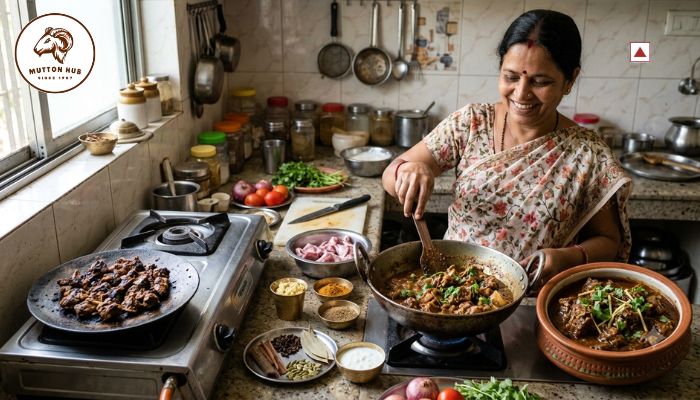
Cooking mutton can be incredibly rewarding, but even a small mistake can affect the final result. Many home cooks struggle with tough, dry, or undercooked meat simply because they overlook a few basic techniques. Understanding the most common mutton cooking mistakes can help you prepare dishes that are tender, juicy, and packed with flavour every time.
Whether you’re making a comforting Bengali mutton curry, Kolkata-style aloo biryani, kosha mangsho, or grilled mutton chops, avoiding these mistakes will make a noticeable difference in both texture and taste.
Choosing the Wrong Mutton Cut
One of the biggest mistakes happens before cooking even begins. Different recipes require different cuts of mutton, and using the wrong one can lead to disappointing results.
For example, shoulder and neck cuts are ideal for slow-cooked curries because they become tender over time, while chops and ribs are better suited for grilling or pan-frying. Matching the cut to the cooking method is essential if you want the best flavour and texture.
If you’re unsure which cut to choose, our guide on Best Cooking Methods for Different Mutton Cuts explains which cuts work best for curries, biryanis, roasting, and grilling.
Skipping the Marination
Many people season the meat and start cooking immediately, but this often results in tougher, less flavourful mutton.
Marinating allows ingredients like yogurt, ginger-garlic paste, mustard oil, and spices to penetrate the meat while helping to tenderize it naturally. Even a few hours of marination can significantly improve the final dish.
For even better results, let the mutton marinate overnight in the refrigerator whenever possible.
Cooking on High Heat
Trying to speed up the cooking process is one of the most common reasons mutton becomes chewy.
High heat causes the muscle fibres to tighten before the connective tissue has enough time to break down. Instead, cook mutton over low to medium heat and allow it to simmer gradually.
Patience is often the secret ingredient behind soft, juicy mutton.
Not Giving the Meat Enough Time
Mutton naturally takes longer to cook than chicken because it contains more connective tissue.
Removing it from the heat too early often leaves the meat firm and difficult to chew. Slow cooking allows collagen to break down gradually, resulting in tender meat and richer gravy.
Whether you’re using a pressure cooker or a heavy-bottomed pot, avoid rushing the cooking process.
Using Too Much or Too Little Water
Water plays an important role in cooking mutton, especially for curries.
Adding too much water at the beginning can dilute the flavours, while too little may cause the gravy to dry out before the meat becomes tender.
It’s usually better to add water gradually as needed rather than pouring in a large quantity all at once.
Ignoring Freshness
Even the best recipe cannot completely improve poor-quality meat.
Fresh mutton cooks more evenly, absorbs marinades better, and delivers superior flavour compared to meat that has been stored for too long.
Choosing fresh, hygienically prepared mutton gives you a much stronger starting point for any recipe.
Overcooking Lean Cuts
Not every cut benefits from extended cooking.
Boneless pieces and lean cuts can dry out if cooked for too long, especially over high heat. These cuts generally require shorter cooking times and careful monitoring.
Understanding the characteristics of each cut helps prevent overcooking while preserving tenderness.
Forgetting to Taste and Adjust Seasoning
Many home cooks add all the spices at the beginning and never taste the dish again.
As the curry reduces during cooking, the balance of salt and spices can change. Tasting the gravy toward the end allows you to adjust seasoning before serving.
This simple habit often makes the difference between a good curry and an excellent one.
Serving the Mutton Immediately
Once the cooking is finished, allow the mutton to rest for five to ten minutes before serving.
Resting helps the juices settle throughout the meat, improving both texture and flavour. It also allows the gravy to thicken slightly, making the dish even more enjoyable.
Starting with Quality Mutton
Many cooking mistakes can be corrected, but poor-quality meat is much harder to improve.
Fresh, hygienically handled mutton responds better to marination, cooks more evenly, and develops richer flavour during slow cooking. That’s why choosing a reliable supplier is just as important as following the recipe itself.
If you’re preparing mutton at home, Mutton Hub offers fresh, carefully prepared cuts suitable for curries, biryanis, kebabs, and a wide variety of traditional recipes.
Final Thoughts
Avoiding these common mutton cooking mistakes can dramatically improve your home cooking.
Choosing the right cut, marinating properly, cooking patiently, and starting with fresh quality meat all contribute to better flavour and texture. Once you master these fundamentals, preparing delicious mutton dishes becomes much easier, whether you’re cooking for a weekday dinner or a special family gathering.
Latest Posts

August 24, 2026
Is Goat Meat Healthier Than Other Red Meats?
July 17, 2026
Mutton for Muscle Building: Is It Good for You?